
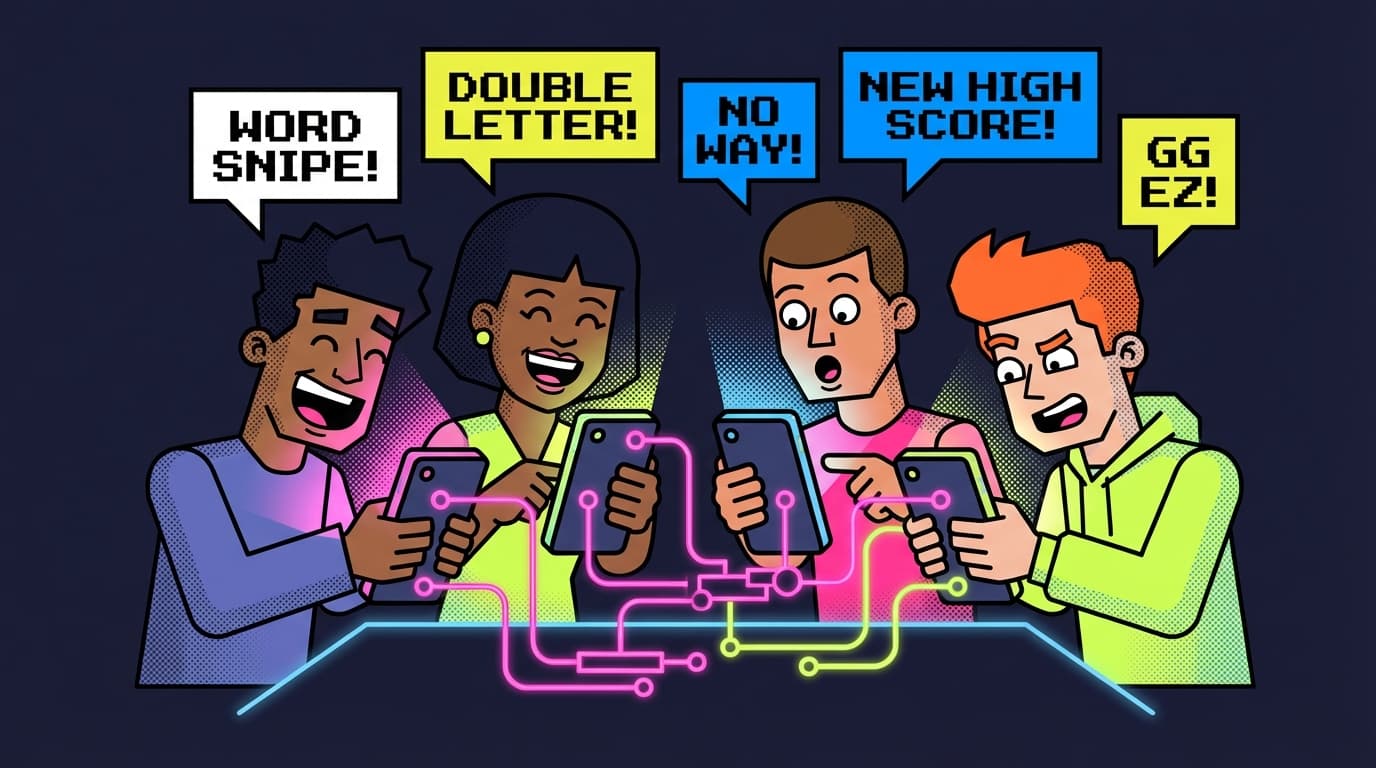
Turn-based word games taught a whole generation that playing with friends means waiting for friends. Real-time word games are correcting that mistake.
The real rating mechanics from the actual code: ELO for 1v1, Weng-Lin for multiplayer, K-factor calibration, and every tier threshold from Bronze to Grandmaster.
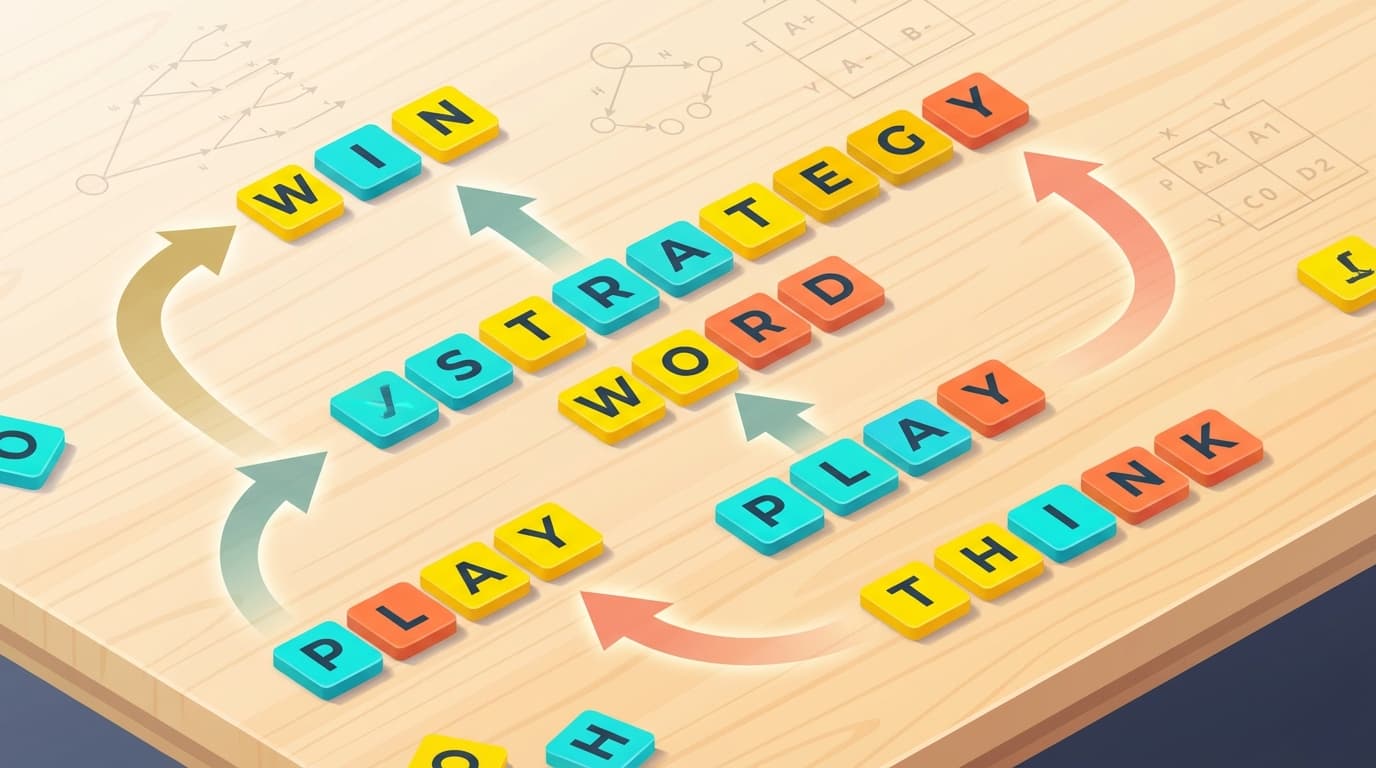
Multiplayer is a different sport from solo play. Pacing, combo management, room-size tactics, fire rounds, and the mental game — the full playbook.
A field guide to the word games everyone is actually playing in 2026 — Wordle, Connections, Strands, Words With Friends, Netflix Scattergories — and the four forces behind a $3.36B boom.
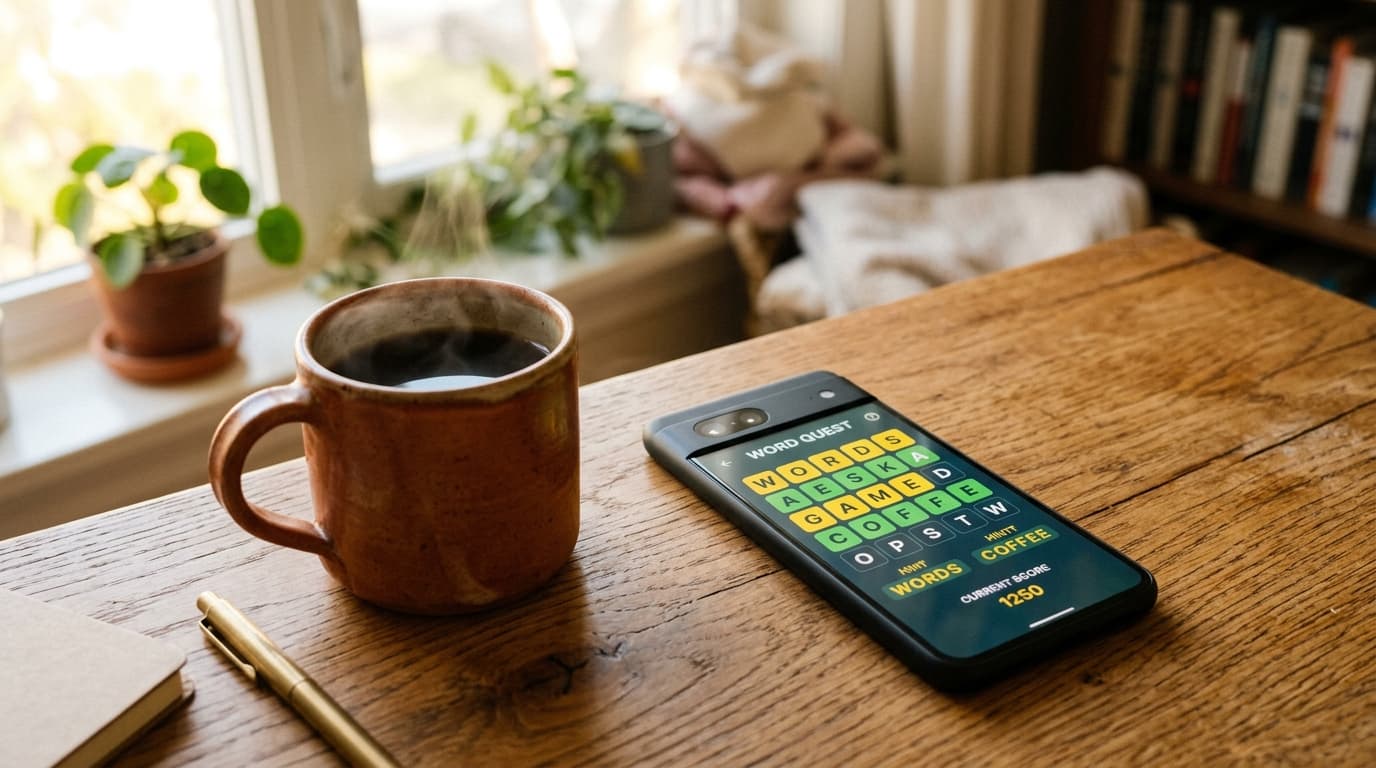
A field guide to free word games that respect your time and wallet. Five-question red-flag checklist + the daily puzzle and PWA patterns that actually work in 2026.
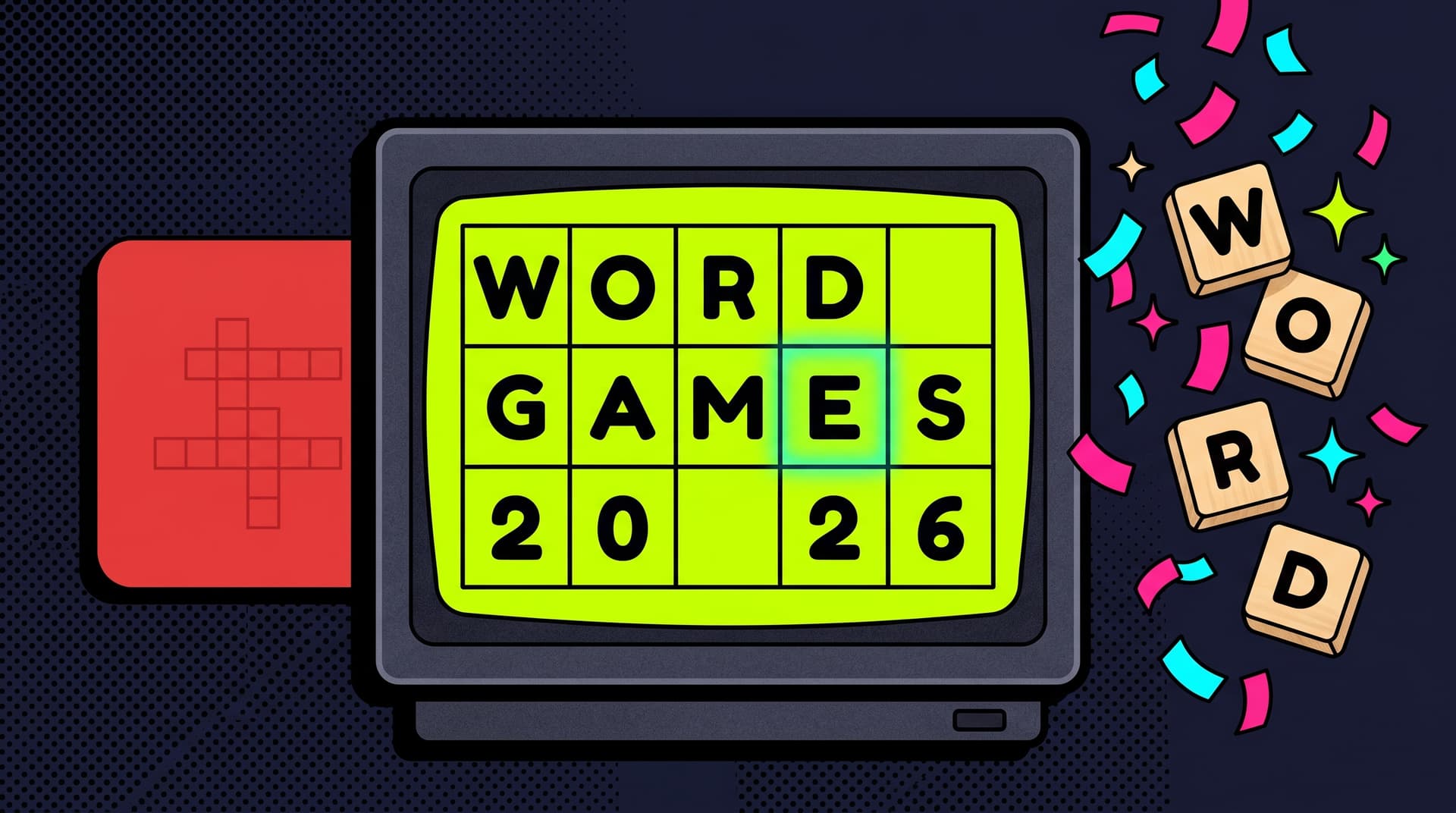
Streaming giants, daily-puzzle obsession, brain-training boom and a TikTok-shaped social loop. Why every screen you own suddenly wants you spelling things.
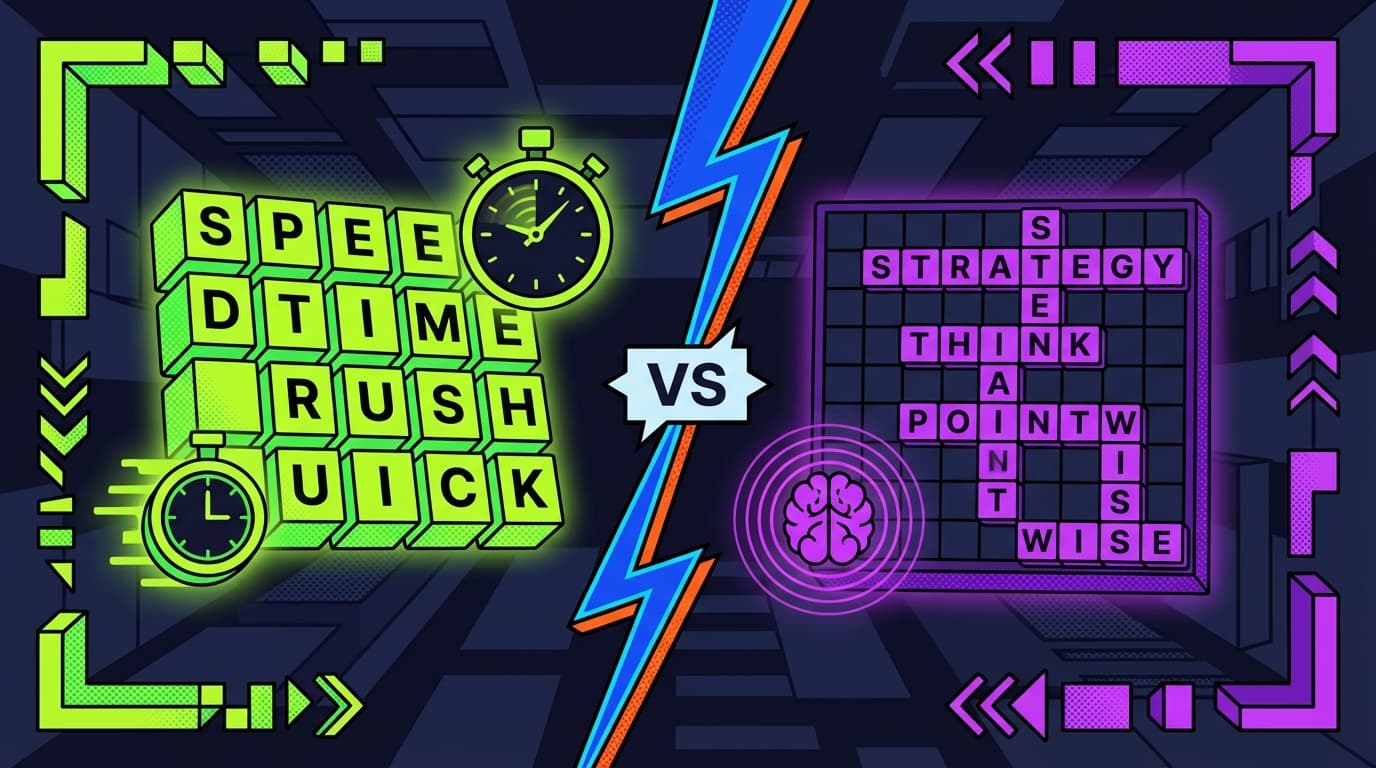
One gives you 3 minutes and chaos. The other lets you stare at tiles for 20. Which classic word game is actually better?
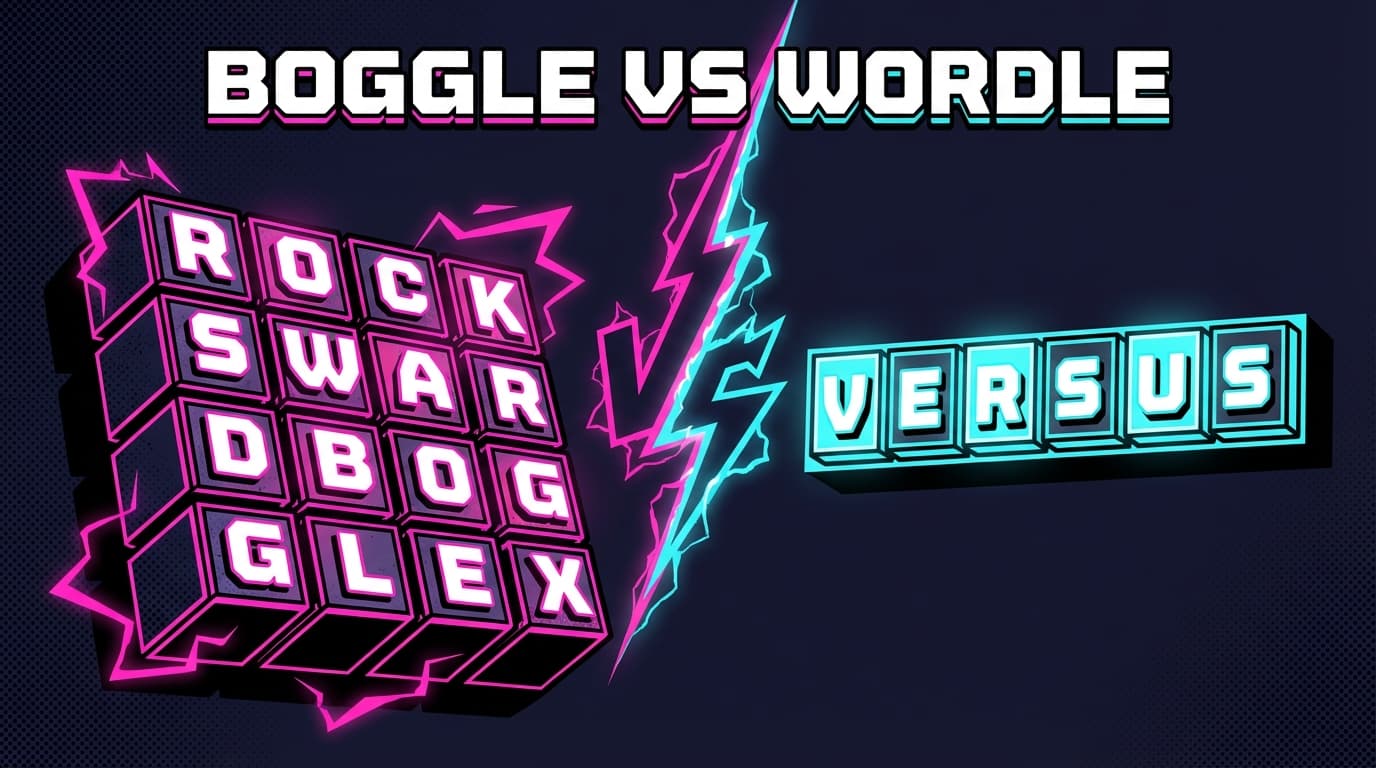
Pattern recognition versus deductive logic. Unlimited rounds versus one a day. Which word game actually fits your brain?
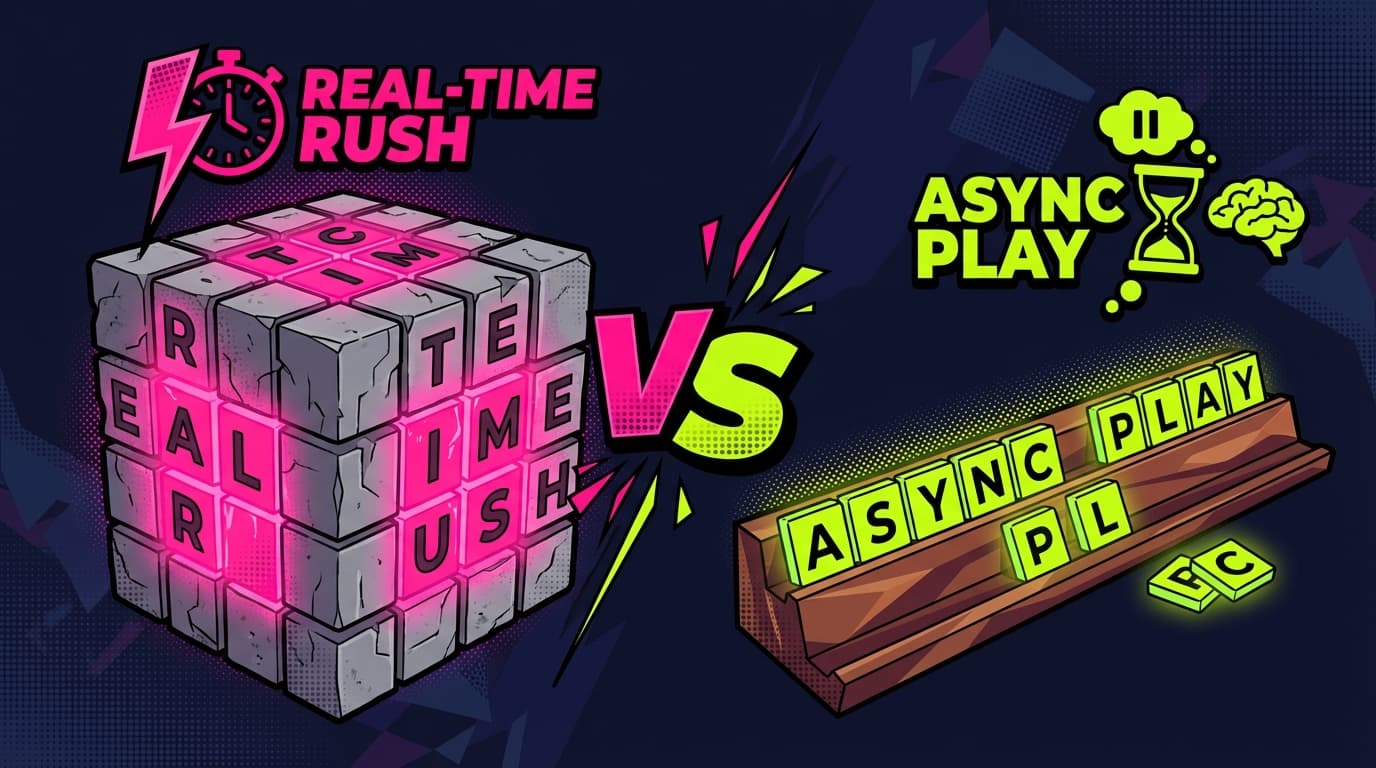
Grid scanning at 100mph versus carefully placing tiles over three days. Plus: one of them charges you for power-ups.
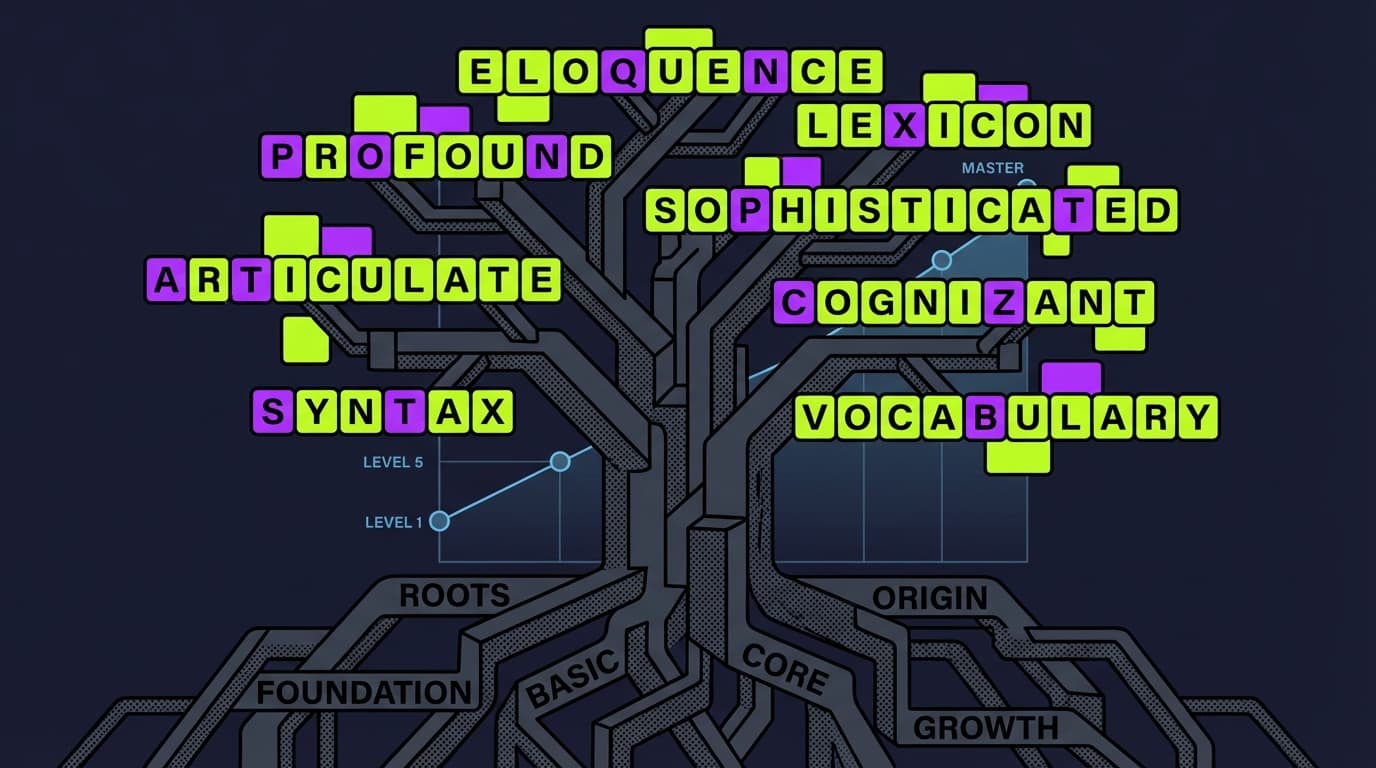
Spaced repetition, active recall, morphology hacks, and the daily routines that actually stick.
Cooperative cognition, competitive trash talk, and why your brain literally lights up more when other humans are involved.
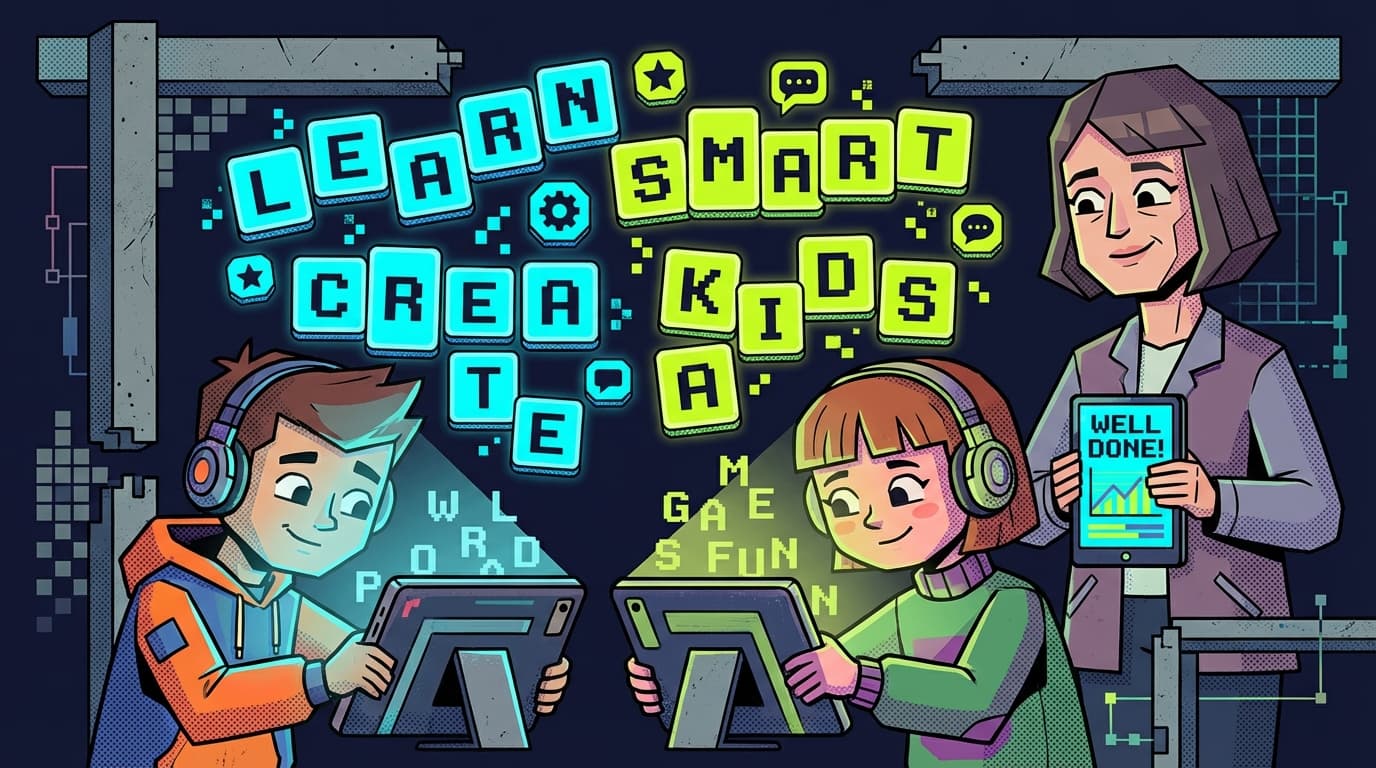
The vocabulary gap is real, the research is compelling, and your students are already gamers — meet them where they are.
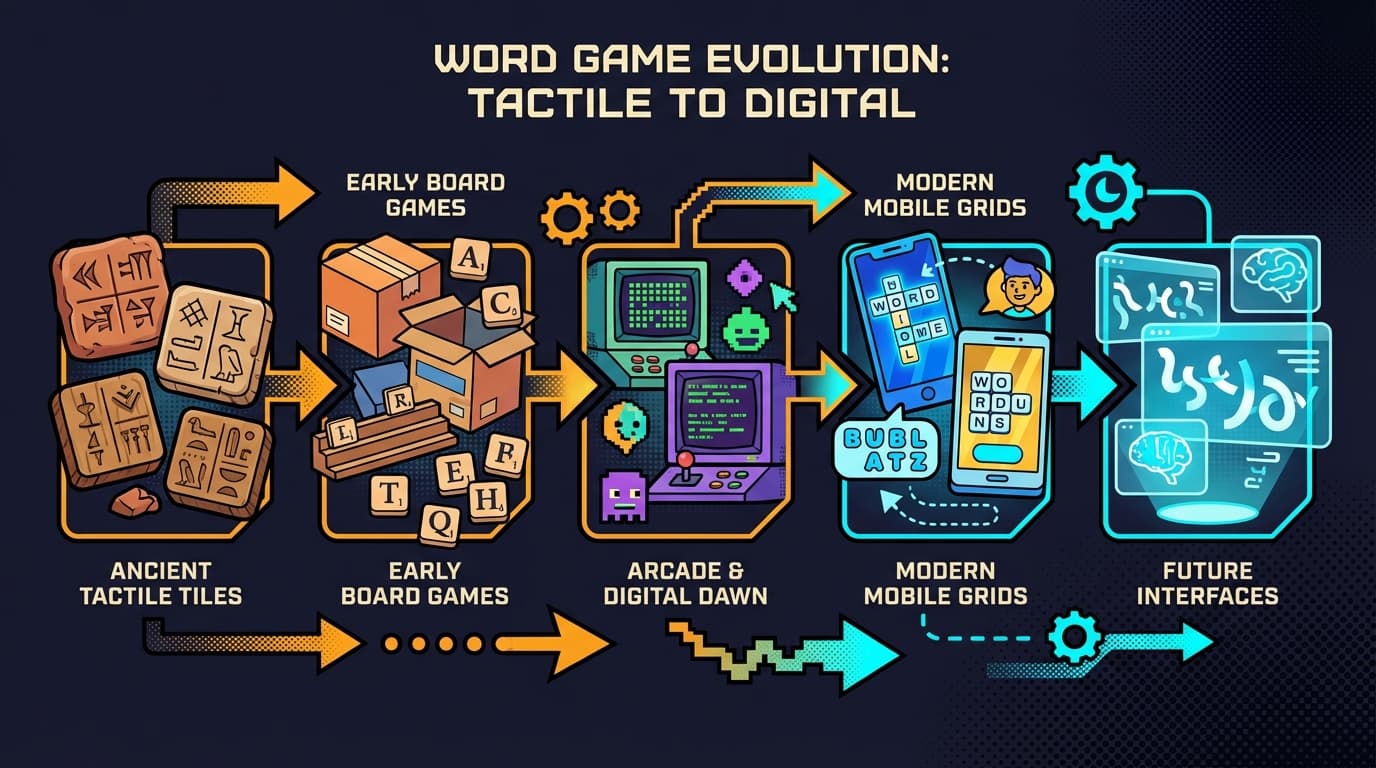
Stolen ideas, crossword mania, a stay-at-home dad's invention, and one five-letter word that broke the internet.
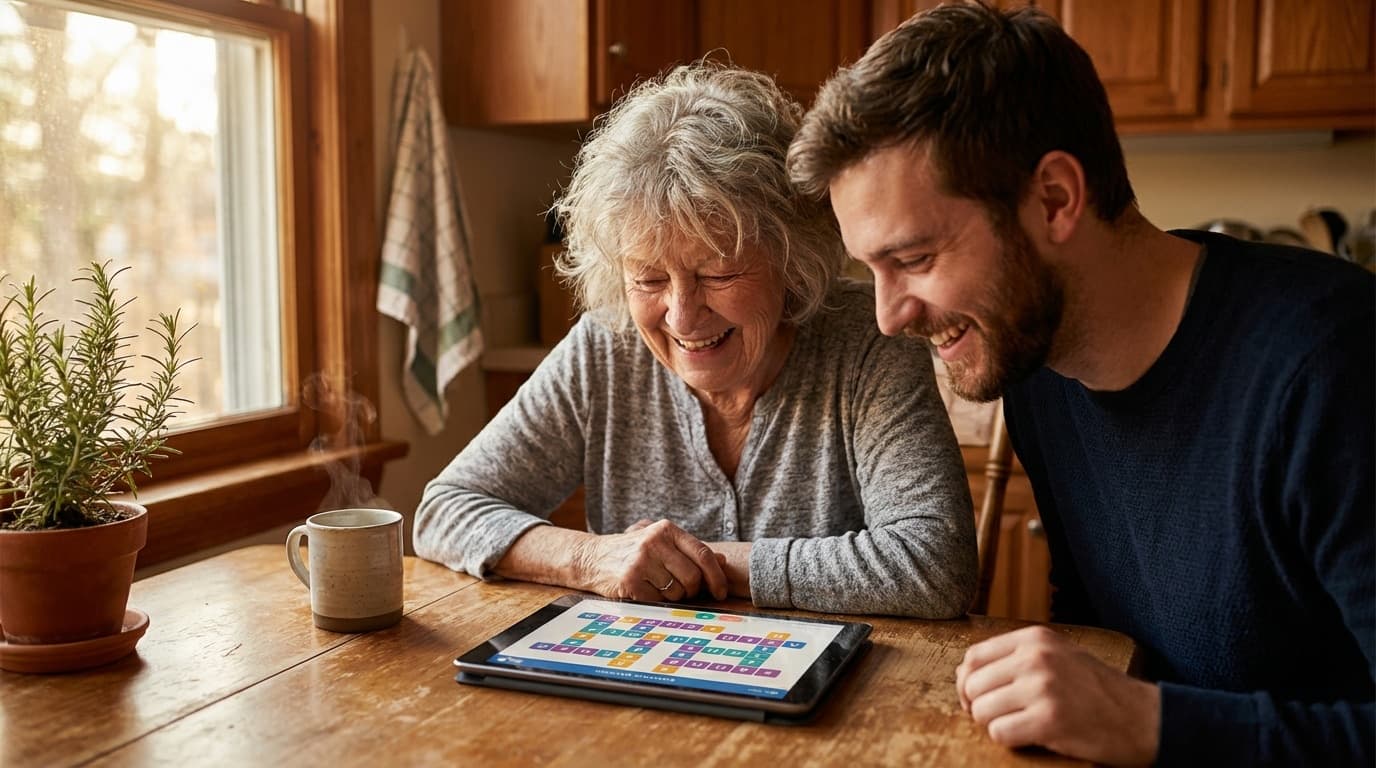
What 19,000-person studies actually say about word games and brain health. Spoiler: it's more nuanced than the clickbait claims.
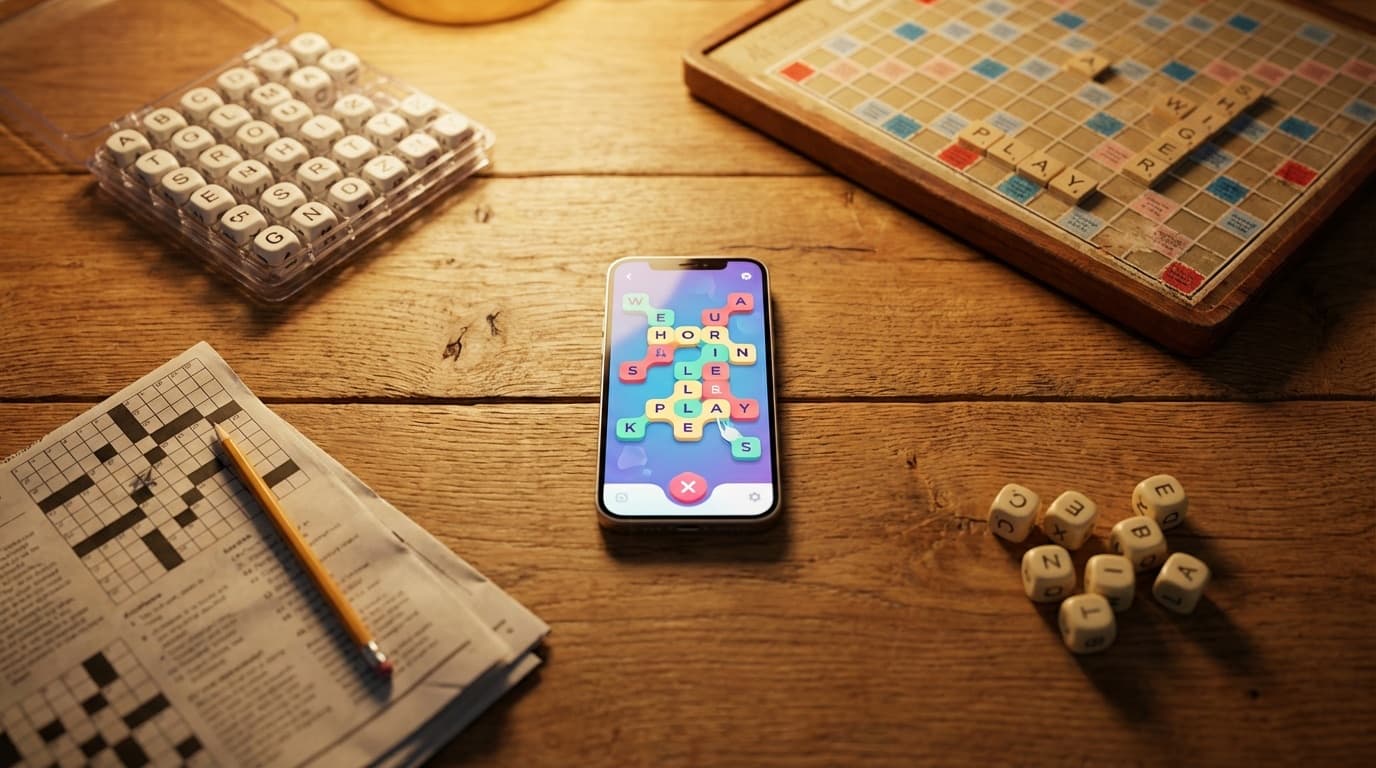
Honest reviews of every Boggle alternative worth playing in 2026. No sponsored fluff — just real opinions from someone who's played them all.
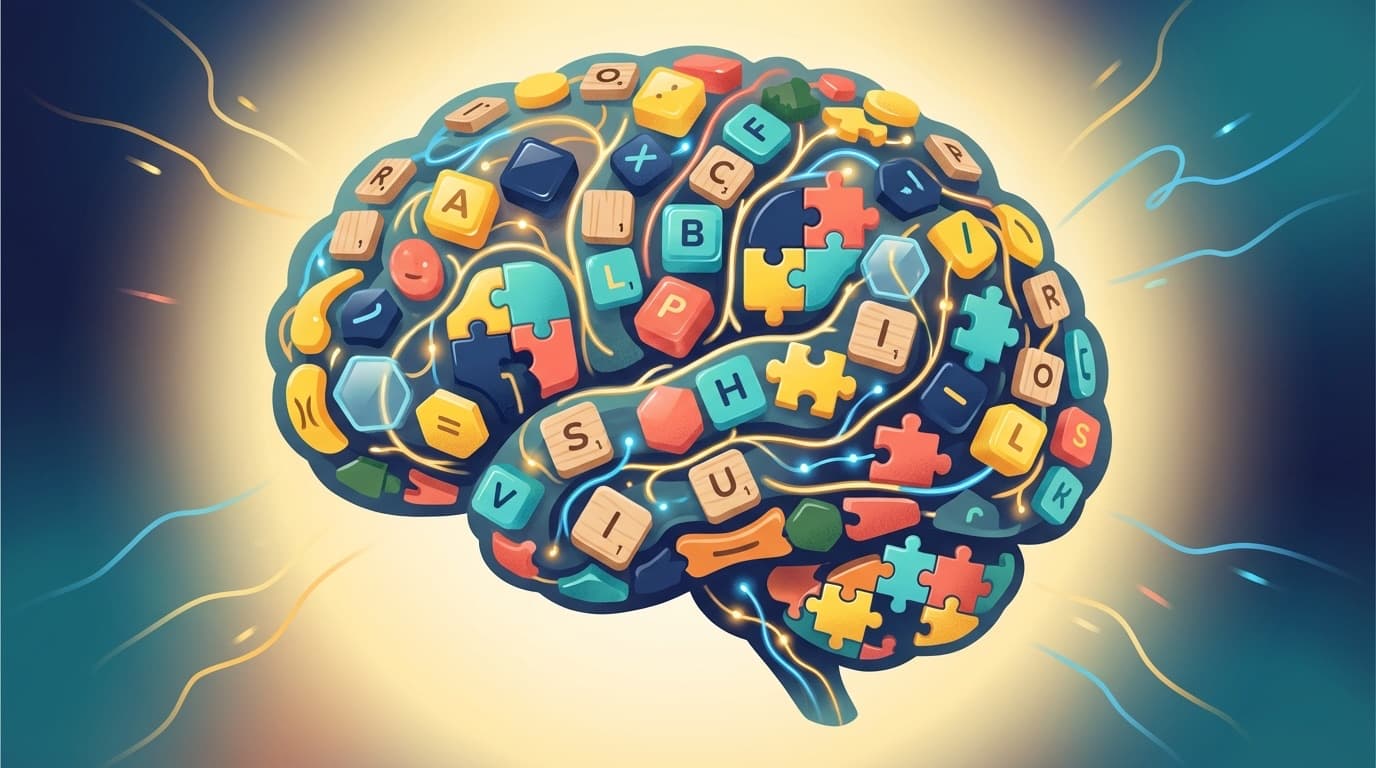
The science behind word game addiction — dopamine, flow states, and the psychology that keeps you coming back for "just one more round."
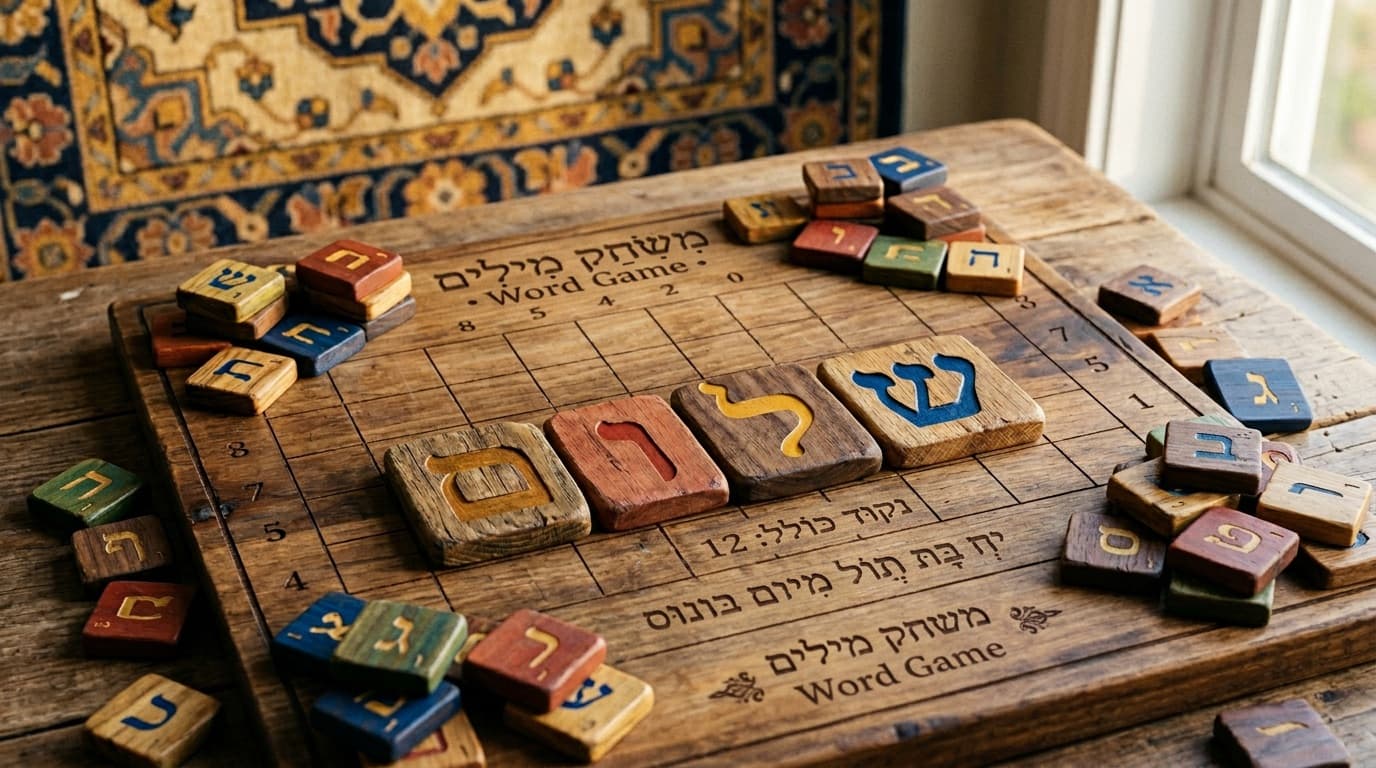
Root systems, missing vowels, and why designing a word game for Hebrew is like solving a puzzle inside a puzzle.
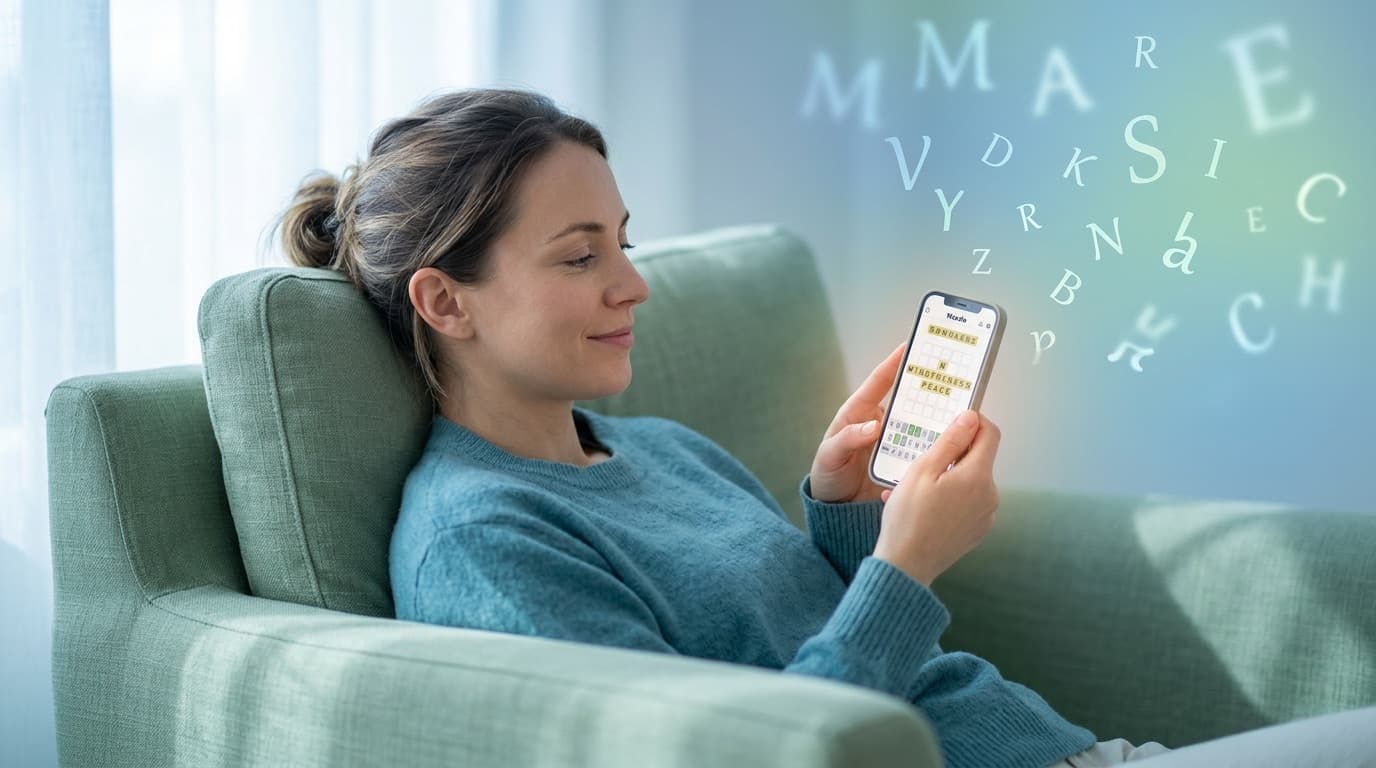
Flow states, digital meditation, and the surprisingly thin line between healthy coping and avoidance.
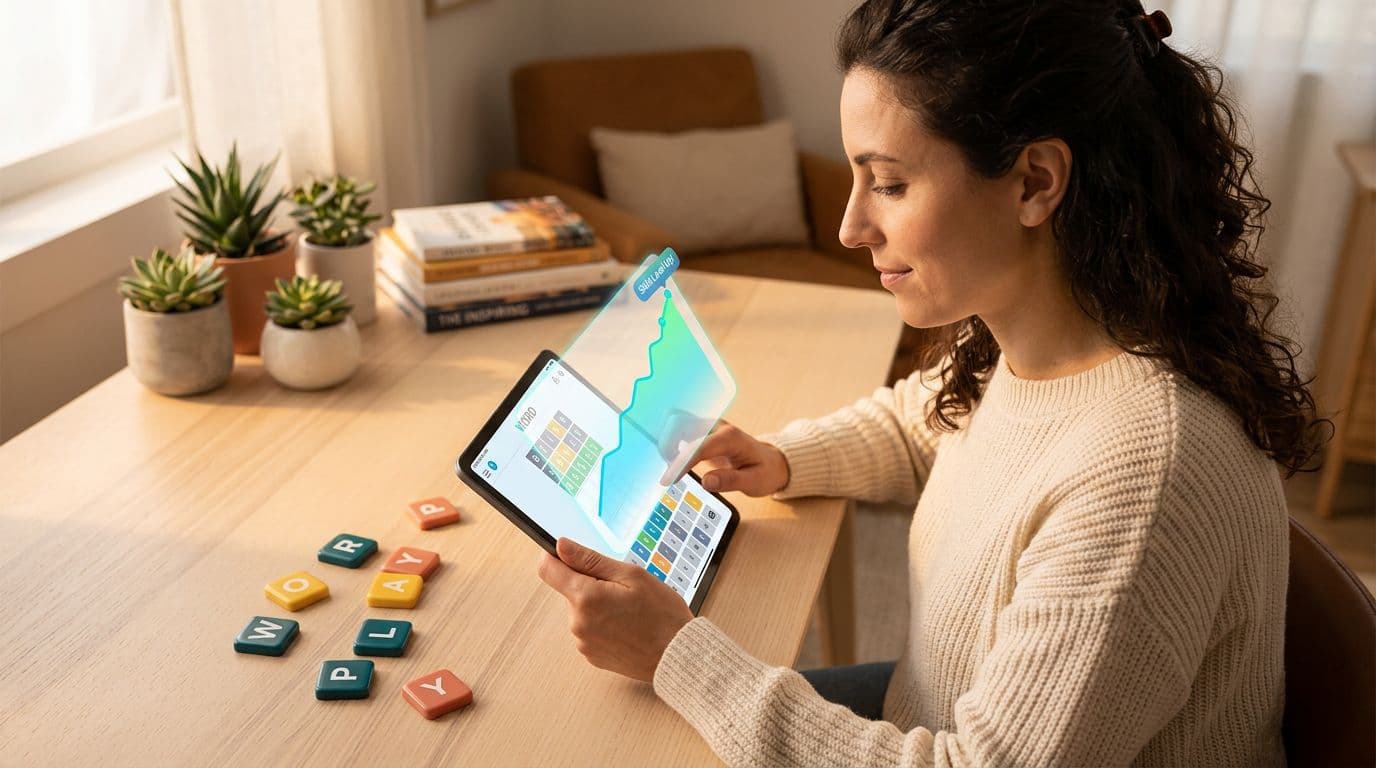
Discover proven strategies to boost your word game performance, from vocabulary expansion to pattern recognition.
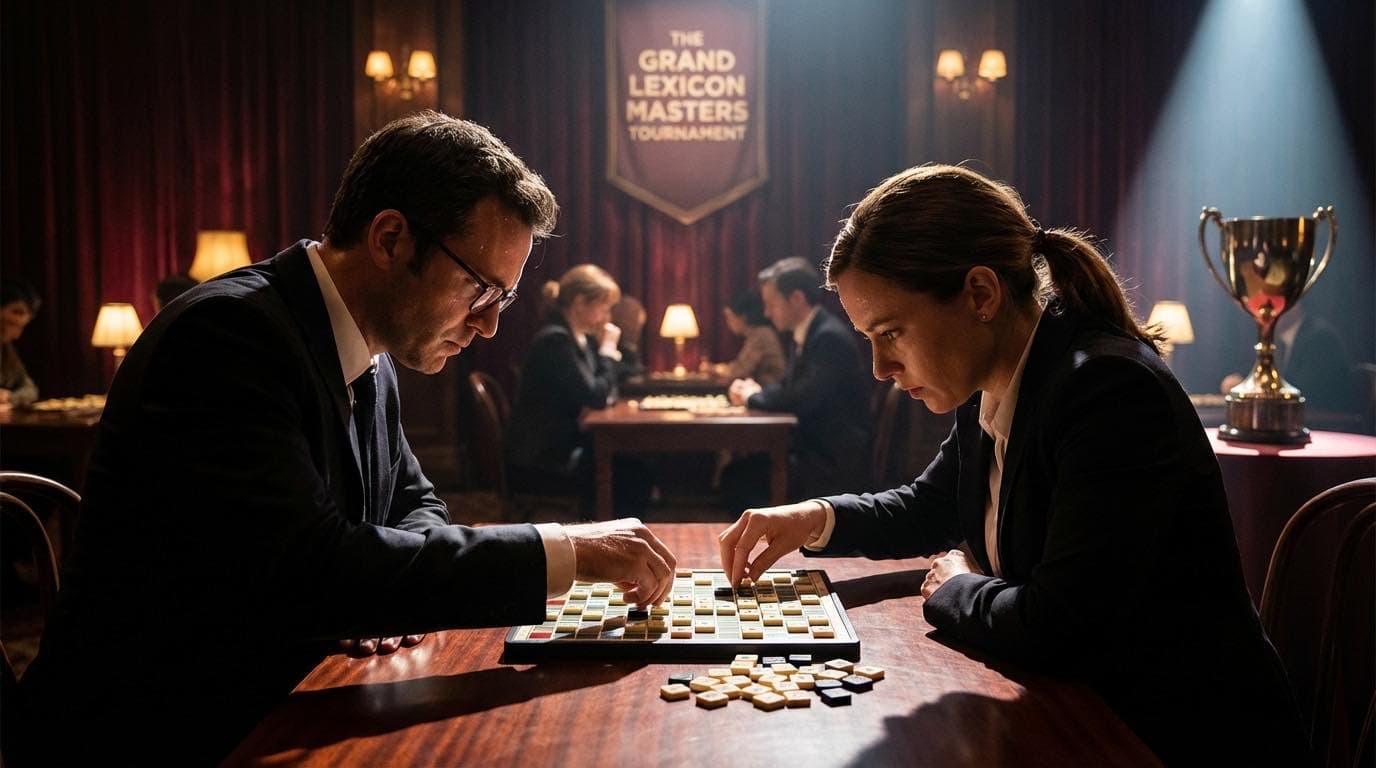
Discover the insider techniques that separate champions from casual players—psychological tricks and training methods from the pros.
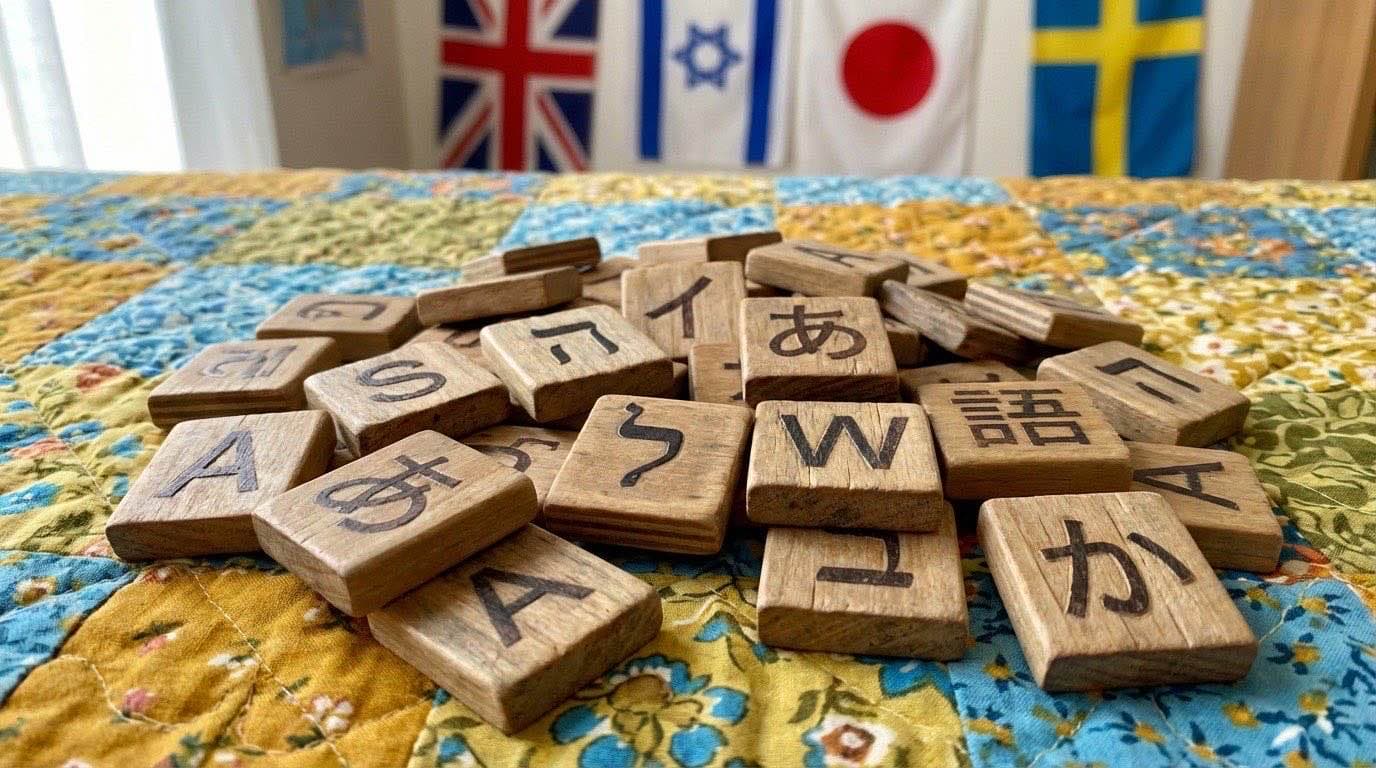
How playing word games in Hebrew, English, Swedish, and Japanese accelerates vocabulary acquisition and supercharges your brain.
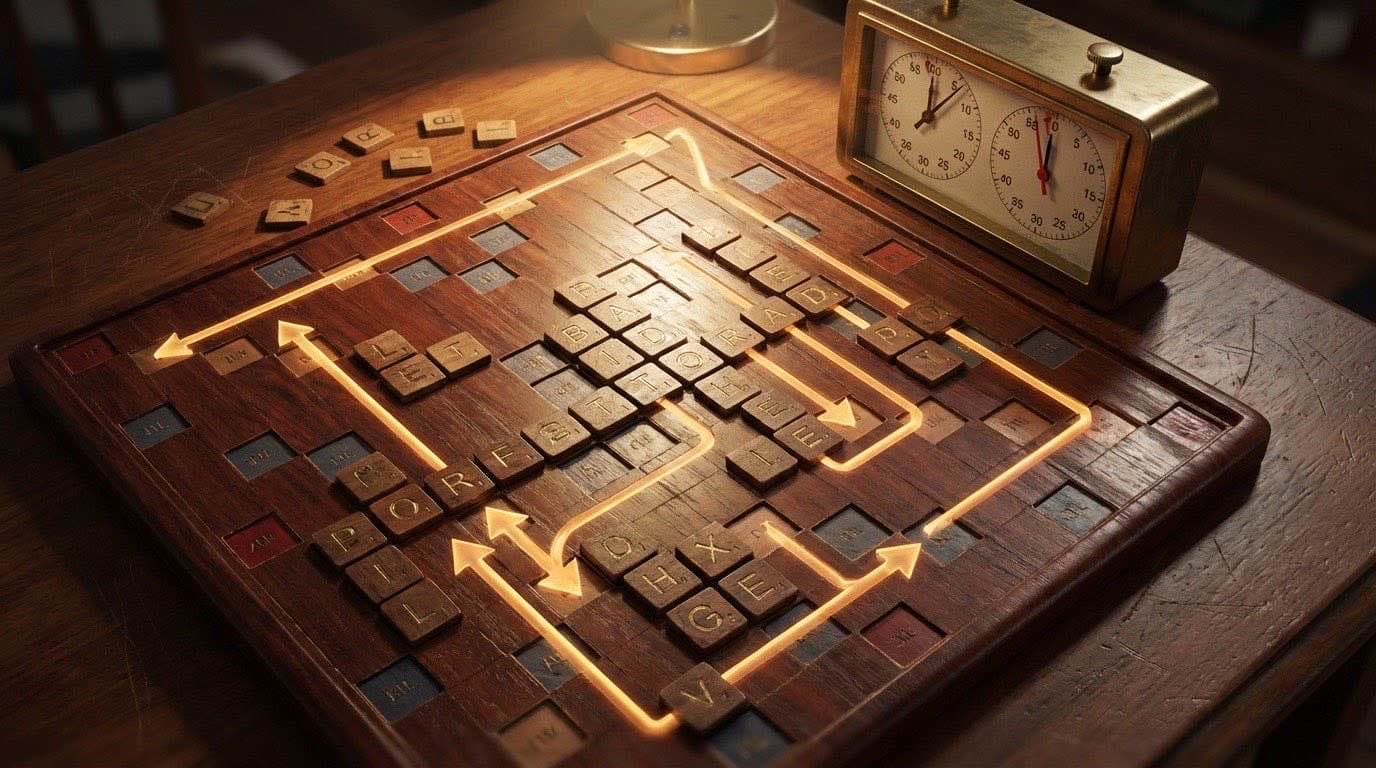
Master these expert tactics to maximize your score and consistently rank among the top players in word game competitions.
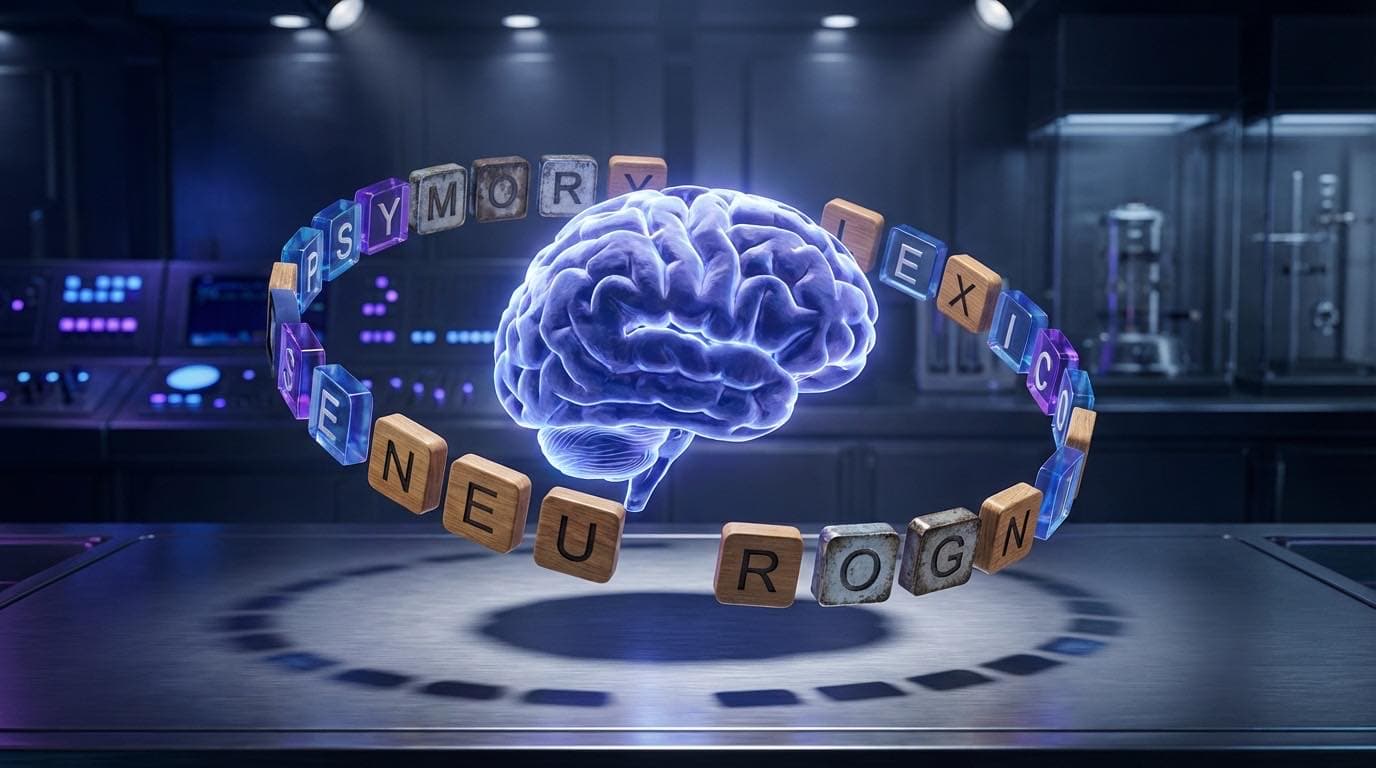
Explore the cognitive benefits of word games and how they improve memory, vocabulary, and mental agility backed by neuroscience.
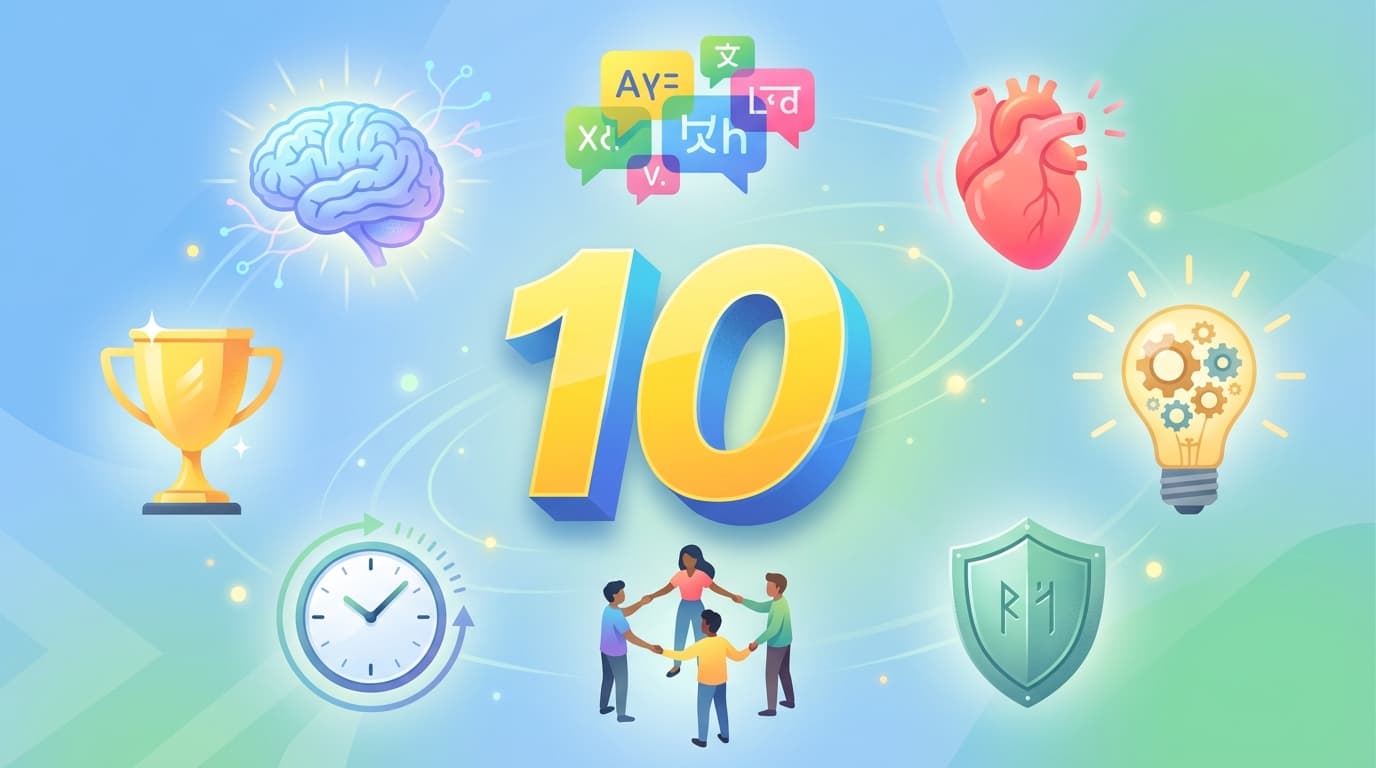
Science-backed reasons why word games are more than just fun—they're essential brain training that can slow aging by up to 5 years.
Join thousands of word game enthusiasts improving their skills with LexiClash. Play solo, compete with friends, or challenge daily puzzles in Hebrew, English, Swedish, and Japanese.